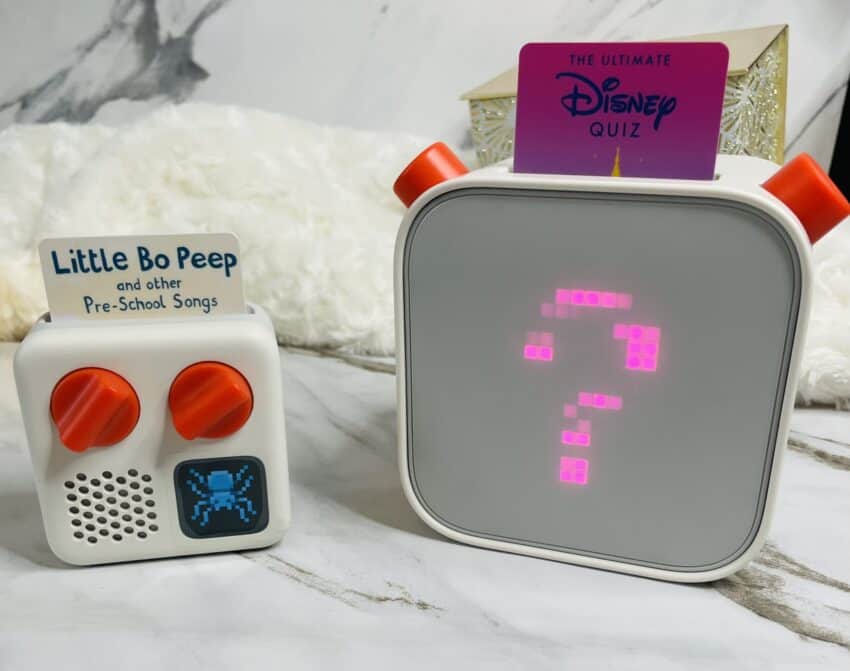
We’ve had both the Yoto Player and Yoto Mini since Christmas, and the biggest thing I can say is that both of my children genuinely love them and have had so much use out of them.
Disclosure: I received a Yoto Player and Yoto Mini as gifted items for a previous gift guide. Yoto has not commissioned this article, and all opinions are my own, based on our experience using both devices.
Which model you choose really comes down to your family’s needs, how you plan to use it, how often you’ll use it, and whether you want it to be a travel-friendly device.
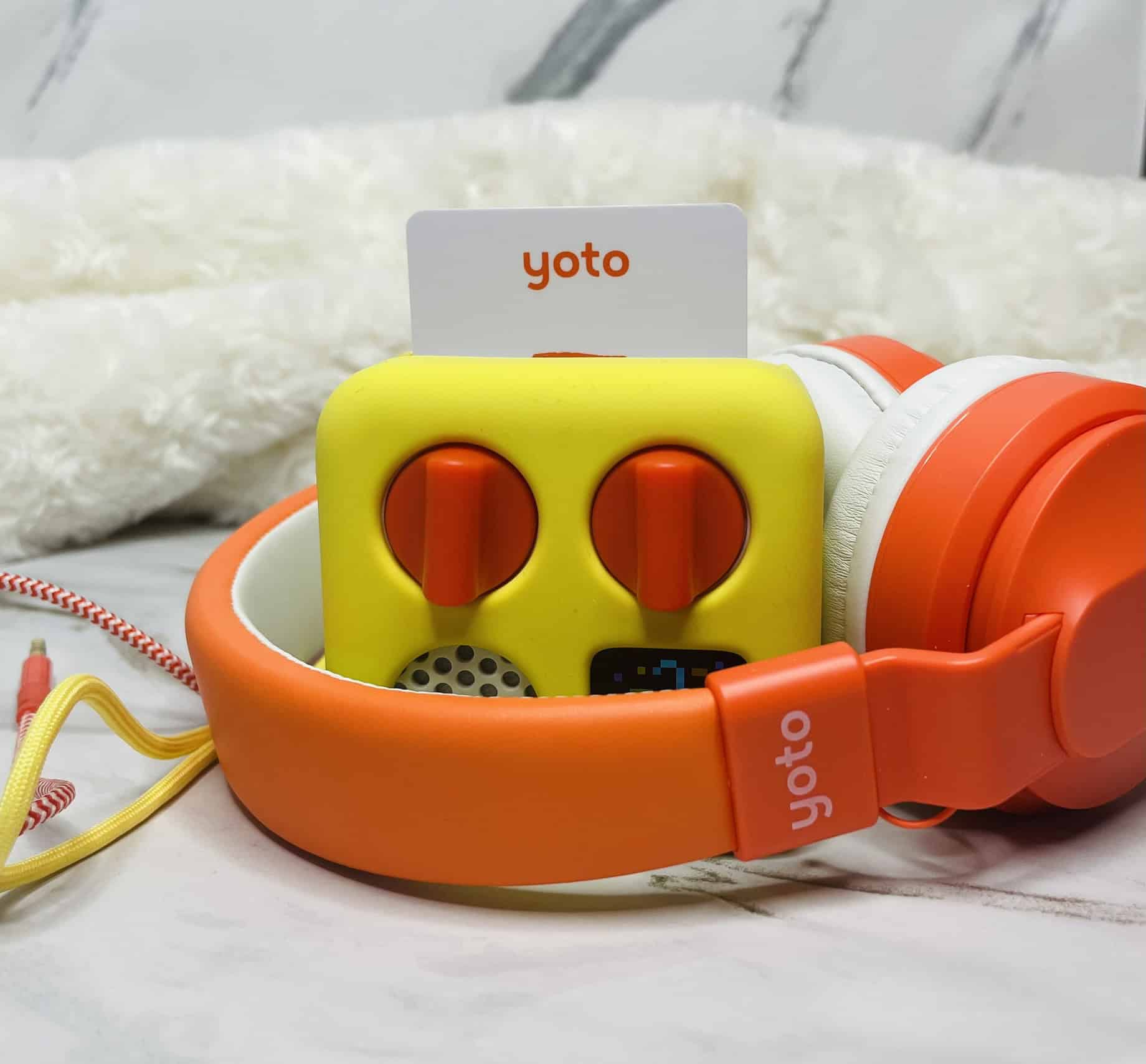
Overall, I think Yoto players are especially great for families who want to reduce or eliminate screen time while still giving children access to digital content in a way that feels independent and exciting.
How do my children use them?
My 7/8-year-old
My older child absolutely loves listening to the Yoto Daily Podcast (and I have to admit, so do I!). We often put it on while eating breakfast. She particularly loves that there are regular features that come back each week, such as **5 Fantastic Facts **and other kid-friendly content. We love Jake!
The fact that some of this content is included with the player makes it feel like a great added feature without needing to buy extra cards.
She also regularly listens to stories at bedtime and loves the music cards, including ones like K-pop Demon Hunters, which she was given for her birthday this year.
My 2/3-year-old
My toddler is still getting used to some of the features of the Yoto mini. He struggles a little with the headphones because the volume is very easy for him to turn way up (definitely something to keep an eye on with little ones!).
He has also managed to drop the player and damage the small screen, despite it having a protective jacket. Thankfully, it hasn’t affected how it works, but it is a reminder that younger children can easily damage things.
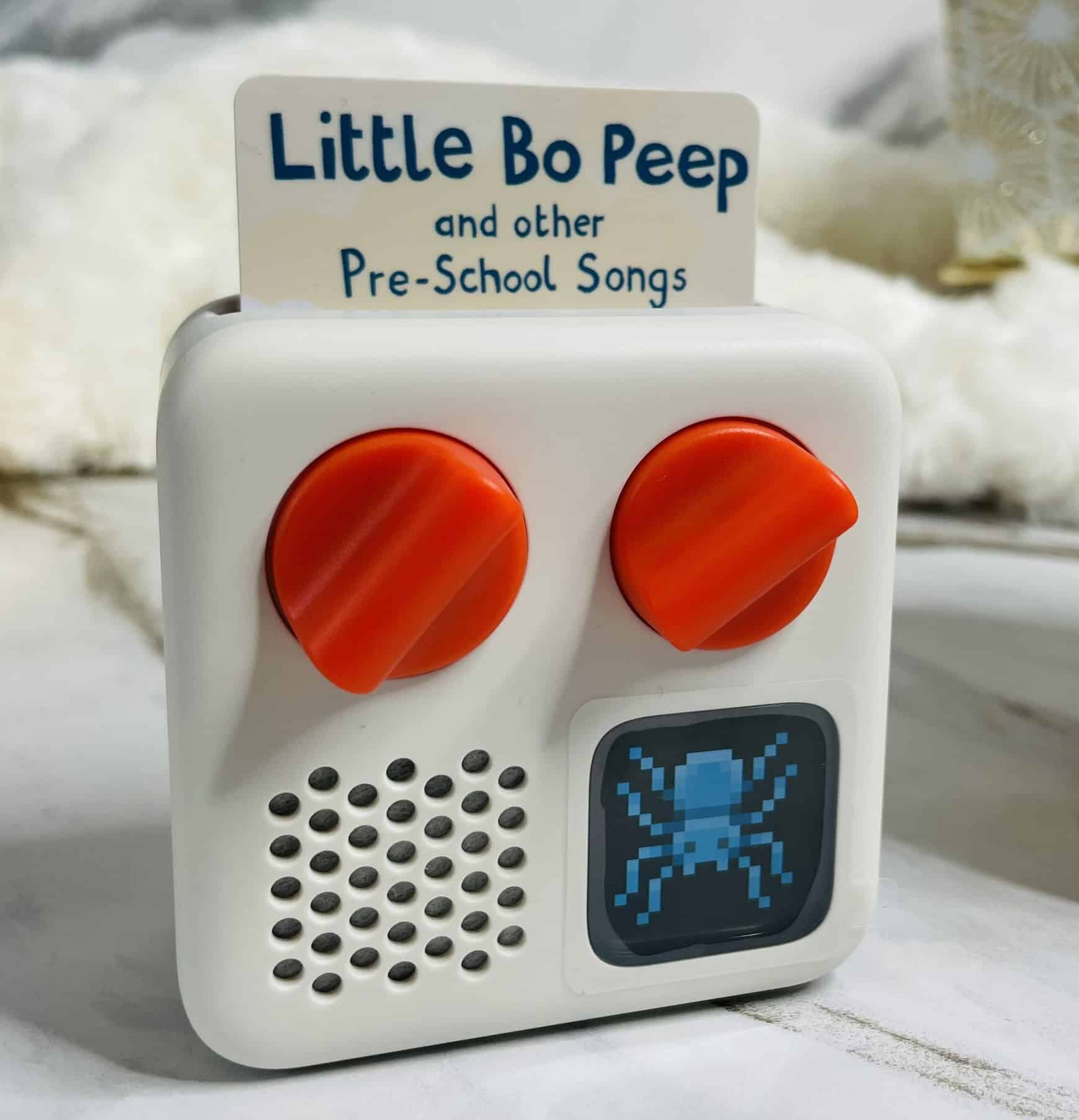
He can easily manage putting the cards in and taking them out himself, which he loves. At the moment, he prefers listening to songs and nursery rhymes over stories (although I’m sure that this will change as he gets older).
The cost of Yoto cards
The good thing is that all Yoto cards work across both devices, so the cost doesn’t change depending on whether you choose the Yoto Player or Yoto Mini.
My advice would be to look out for offers if you can. There are often good discounts available; for example, there have been World Book Day offers where cards were just £1, and stores such as Smyths Toys often have promotions too.
The blank Make Your Own cards have been one of our favourite things about the Yoto players.
They’re brilliant for recording your own stories, making up silly songs, or recording messages from family members.
We’ve recorded a bedtime story in my voice for my toddler to listen to when I’m working evenings, which has been lovely.
Quick Read: How To Get Cheap and Free Yoto Cards & Content
Yoto Player vs Yoto Mini
The biggest difference between the two is really the size and portability.
The Yoto Mini is much more travel-friendly and is the one I’d choose for long car journeys, holidays, or if your child likes to move around with their audio player.
One thing worth remembering is that you do need Wi-Fi to download new content onto the players.
We found this out when we were staying in a caravan without Wi-Fi, we couldn’t add any new cards at the time. However, once content is downloaded, it can be used without needing a constant connection.
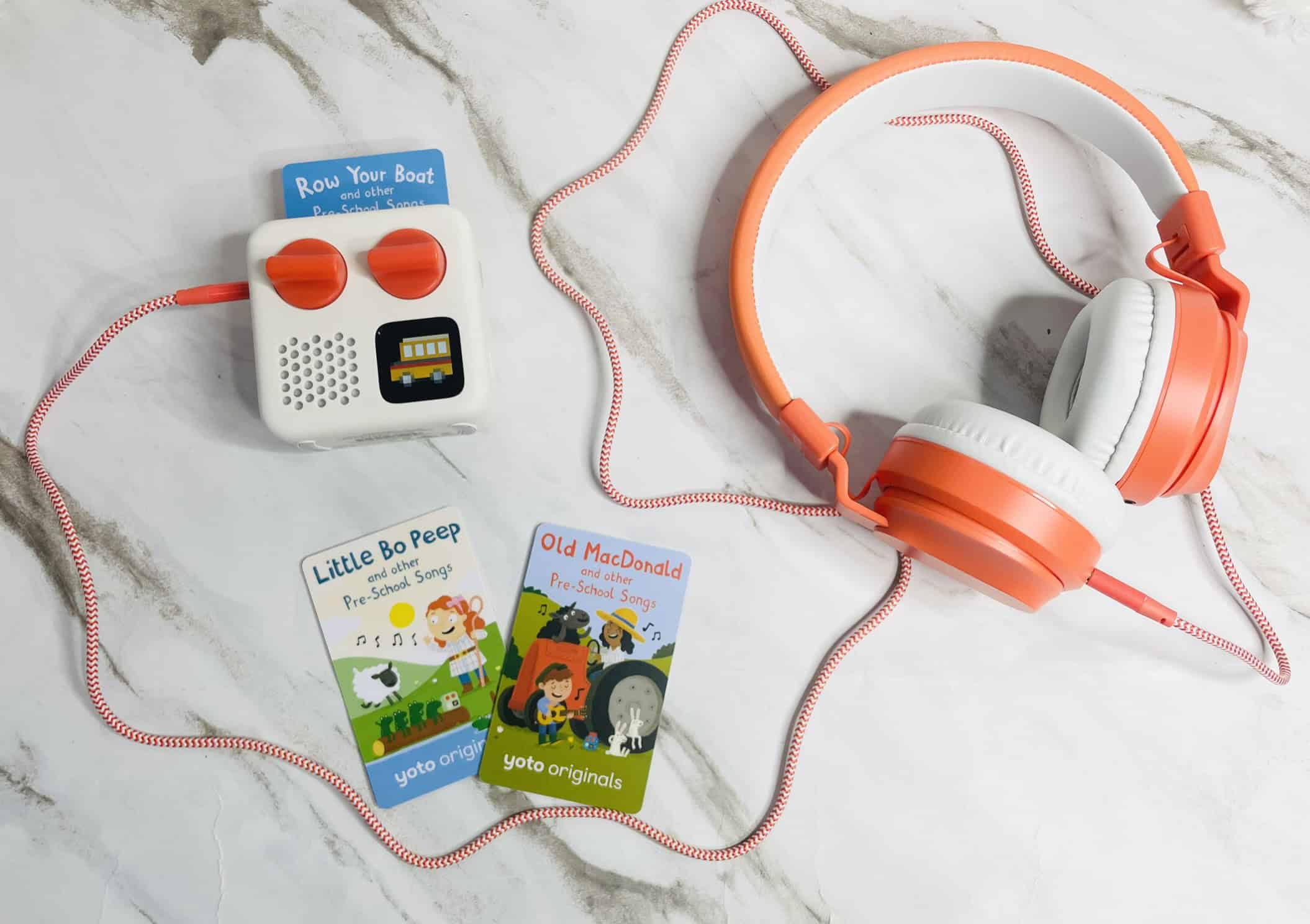
Both devices have excellent longevity and can easily be used by multiple children in the same family as they grow.
The device you choose doesn’t limit the content available; all Yoto cards and online content work with both the Yoto Player and Yoto Mini.
Any content you buy can also be used across additional Yoto devices if you decide to add more to your collection in the future.
Sound quality
Because the original Yoto Player is larger, it has better sound quality overall.
The Yoto Mini is still good, but I think it is better suited to personal listening rather than entertaining a whole room of children.
That said, it works perfectly well for bedtime stories in a nice quiet bedroom.
Which one is better?
I think the Yoto Mini is the better choice if you travel frequently or your child is likely to carry it from room to room. Although, in reality, both of ours get moved all around the house daily!
Both are easy to charge, and both have headphone jacks, making them flexible for different situations.
Yoto Player
- Better sound quality
- Better as a main family speaker
- Can be used as a clock
- Great for bedrooms or shared listening
Yoto Mini
- Better for individual use
- Great for travel
- A good option as an additional player for another child
Battery life has been decent on both devices, and we’ve never found ourselves constantly needing to recharge them.
Yoto vs Tonie
I don’t actually own a Tonie, so I can’t give a direct comparison from personal experience, but there are a couple of reasons why Yoto appeals to me more.
My children understand that the cards are specifically for their Yoto, whereas I think character figures could potentially get mixed up with their other toys and become easier to lose.
I’ve also seen discussions around some Tonies not always using the original soundtrack or voice recordings.
For example, some people have noted that certain character versions of songs are not the original artists’ versions.
Yoto tips
Don’t sleep on the blank cards. These are one of the features I think makes Yoto really special. They’re great for recording your own stories, creating personalised content, or saving family memories – especially the voices of grandparents or other loved ones.
Extra accessories are also worth considering. Things like card rings and smaller card cases are really useful if you’re taking cards out and about and espeically if you travel frequently.
Overall, I think both the Yoto Player and Yoto Mini are fantastic screen-free options for kids.
The best choice depends on how your family will use it: the original Yoto is better as a main household device, while the Mini is brilliant for portability and personal listening.