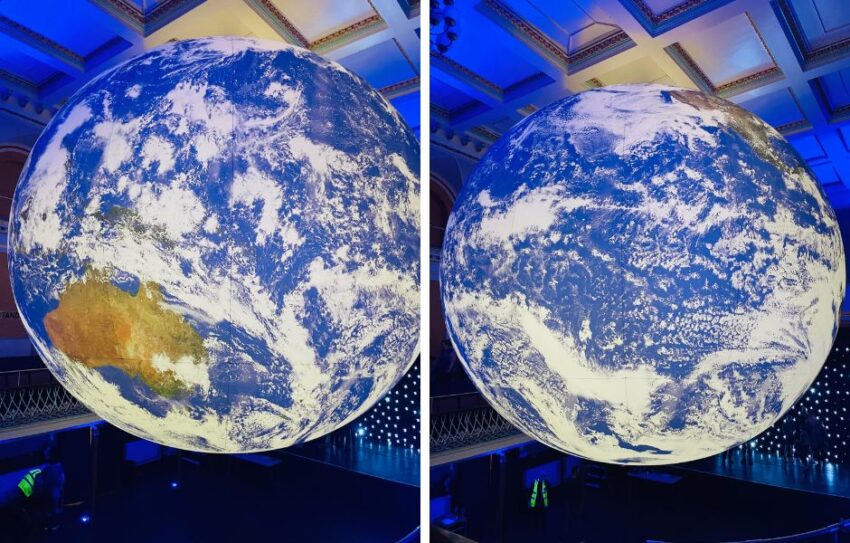
This weekend we visited the Gaia art installation, which is currently on display at our local town hall.
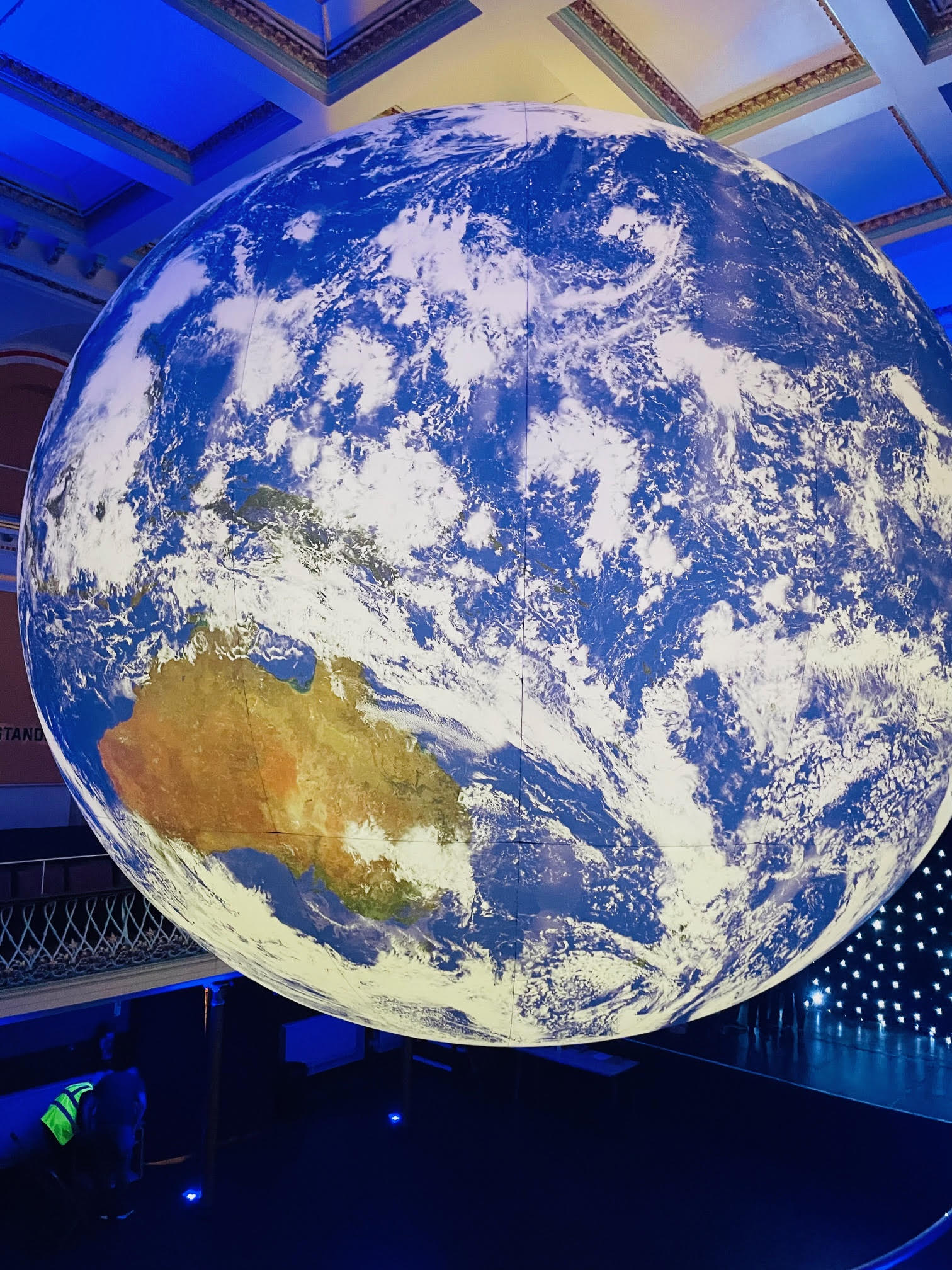
Gaia is a huge, inflated model of planet Earth, suspended from the ceiling and slowly rotating.
We were able to view it both from the floor and from an upper gallery, which offered a completely different perspective.
From below, it felt as though you were gazing up at Earth from space; from above, it gave the illusion of orbiting our own planet.
The main reason we decided to visit was our two-year-old son, who is absolutely fascinated by planets.
Not rockets, stars or astronauts – just the planets themselves. He can name them all, including the five dwarf planets, and talks endlessly about their colours, their positions in the solar system, and their unique features.
For example, he knows that Makemake is in the Kuiper Belt, Mercury is closest to the Sun, and Jupiter has its famous giant red spot.
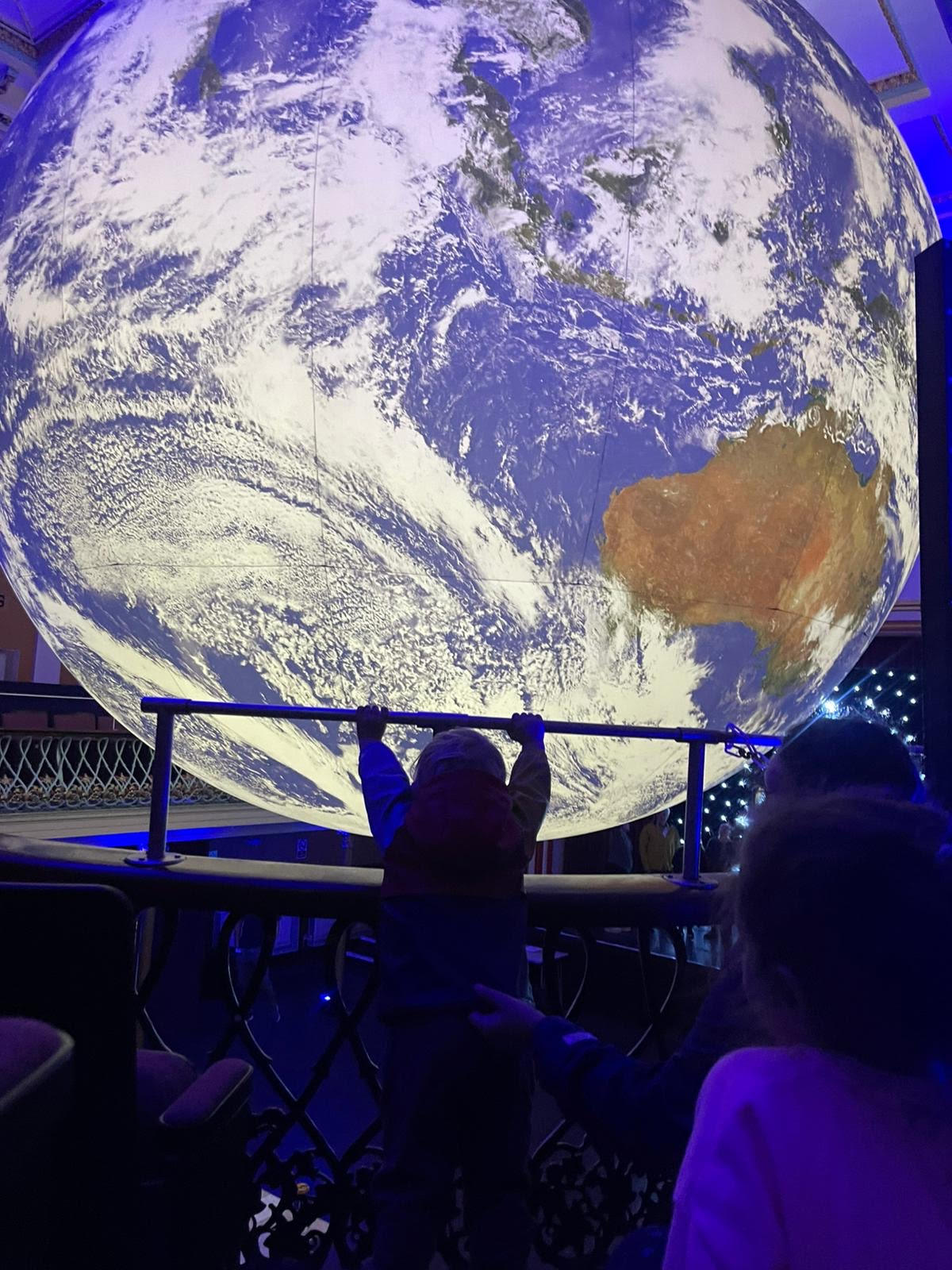
So while he enjoyed looking at the enormous globe of Earth, he was slightly disappointed that it wasn’t Jupiter!
The experience
As we walked around the hall, gentle music played in the background along with the faint sound of people talking. I assume this was meant to represent the hum of life on Earth billions of conversations happening at once.
Personally, I found this a little distracting (the chatter not the music) but it did add atmosphere for many of the other visitors.
During its stay, the Gaia installation is also hosting several related events, including an evening performance by a string quartet and a discussion night with wildlife presenter Michaela Strachan.
It’s nice to see the venue building a programme around the theme of Earth and our connection to it.
We were also pleased to see Gaia displayed indoors, after theMoon installation was placed in the docks last year and suffered heavy damage during stormy weather
About Gaia
Gaia is the work of British artist Luke Jerram, known for creating large-scale public art that transforms familiar spaces. The sculpture itself is about seven metres in diameter, created using detailed 120-dpi NASA satellite imagery of the Earth’s surface.
Each centimetre of the artwork represents around 18 kilometres of our planet in real life.
When installed indoors, Gaia is usually suspended from the ceiling and gently rotates at a speed that simulates the Earth’s rotation when viewed from the Moon.
Final thoughts
The Gaia Earth installation is a fascinating and thought-provoking spectacle, and there was a lot of interest during our visit.
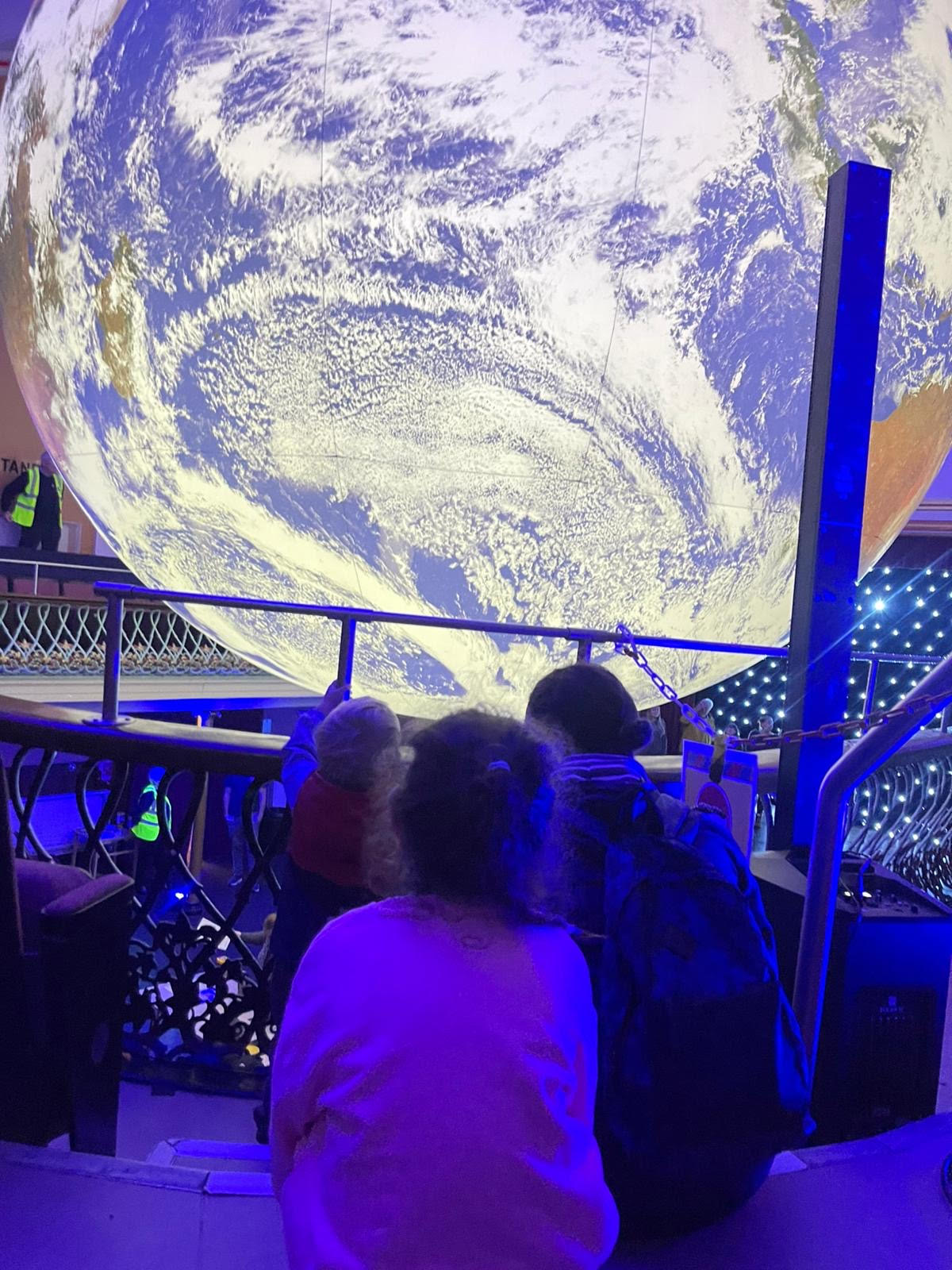
It’s not something you can spend a huge amount of time viewing – we stayed for about fifteen minutes, which felt right with young children, though adults might enjoy lingering longer to take in the details and the atmosphere.
Entry was free, although donations were welcome, and we were happy to contribute.
If Gaia comes to a town near you, I’d definitely recommend going to see it in person. It’s a gentle reminder of just how beautiful and fragile our planet really is.
You can find out more about the artwork and see the full list of tour dates on the official website: https://my-earth.org